
Addiction is a chronic brain disorder and not simply a behavior problem involving alcohol, drugs, gambling or sex, experts contend in a new definition of addiction, one that is not solely related to problematic substance abuse.
The American Society of Addiction Medicine (ASAM) just released this new definition of addiction after a four-year process involving more than 80 experts. [...]
Two decades of advancements in neuroscience convinced ASAM officials that addiction should be redefined by what's going on in the brain. For instance, research has shown that addiction affects the brain's reward circuitry, such that memories of previous experiences with food, sex, alcohol and other drugs trigger cravings and more addictive behaviors. Brain circuitry that governs impulse control and judgment is also altered in the brains of addicts, resulting in the nonsensical pursuit of "rewards," such as alcohol and other drugs.
A long-standing debate has roiled over whether addicts have a choice over their behaviors, said Dr. Raju Hajela, former president of the Canadian Society of Addiction Medicine and chair of the ASAM committee on addiction's new definition.
"The disease creates distortions in thinking, feelings and perceptions, which drive people to behave in ways that are not understandable to others around them," Hajela said in a statement. "Simply put, addiction is not a choice. Addictive behaviors are a manifestation of the disease, not a cause."
Even so, Hajela pointed out, choice does play a role in getting help.
"Because there is no pill which alone can cure addiction, choosing recovery over unhealthy behaviors is necessary," Hajela said.
This "choosing recovery" is akin to people with heart disease who may not choose the underlying genetic causes of their heart problems but do need to choose to eat healthier or begin exercising, in addition to medical or surgical interventions, the researchers said.
"So, we have to stop moralizing, blaming, controlling or smirking at the person with the disease of addiction, and start creating opportunities for individuals and families to get help and providing assistance in choosing proper treatment," Miller said.
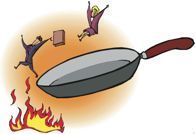 There has been a move to treat addiction as a health problem. On the surface this may seem like an improvement, but drug users may find themselves out of the frying pan and into the fire. The Livescience article I quoted from is unremarkable from other articles in the mainstream media. However I do find the choice of language telling. First we are told that addicts are not in control of their behavior, the disease robs them of the ability to make rational choices, except when they choose "recovery". So when addicts choose to enter drug treatment it is of their own volition, but when they engage in addictive behavior they are powerless. How do the addictionologists explain this rather convenient (for the addictionologist's paycheck) paradox?
Dr. Raju Hajela then compares addiction to heart disease, yet addiction is not treated like heart disease. Patients with heart disease may or may not act on their doctor's recommendation, they don't need to do anything they don't want to. If the patient does not implement lifestyle changes, the proper course is to reduce the harm of the disease. And yet with addiction, the individual is expected to cede control of much of their life to the care of the doctor. This is unethical and antithetical to the proper role of a healer.
Further Reading:
The ethics and effectiveness of coerced treatment of people who use drugs by Alex Stevens, PhD. Human Rights and Drugs, Volume 2, No. 1, 2012
Should we have bailiff and judge at weight watchers DPA Blog
Out of the frting pan and into the fire


