Sunday, November 24, 2013

Opiates are not Highly Addictive

SAMHSA: National Survey on Drug Use and Health, 2008


In most news stories about prescription opioids or heroin, the drugs are usually described as "highly addictive." Heroin in particular is considered among the most addictive, supposedly immensely pleasurable and causing an insatiable craving for more. And yet according to data collected by SAMHSA, only 13.4% of people who first try heroin are dependent on the drug one year later. For "non-medical" users of prescription opioids, the number is only 3.1%. Interesting, based on the SAMHSA data, marijuana is almost twice as addictive as oxycodone.


One may wonder why heroin users become dependent at a rate more than four times that of pharmaceutical opioid users. This may be explained in part due to the heroin shift, users of pharmaceutical opioids switching to heroin following the nationwide crackdown on "pill mills." Secondly heroin is so demonized that that those who use it are a self-selected population. Compared to cannabis or cocaine, there just aren't as many recreational heroin users out there (people who might get high occasionally on weekends or special occasions).

Defenders of the drug war claim that drug prohibition is the only thing holding back legions of potential addicts. The truth is that the response to opioids is highly individualized, many people experience only negative effects (nausea and headaches are common) and no euphoria.

The Prescription Painkiller Experience: Less than a Third Say They Like It
by Maia Szalavitz


Many people fear that mere exposure to prescription painkillers like Vicodin or OxyContin will set them down the road to addiction. But new research on the response to opioid medication suggests that most people don’t particularly like the experience of using the drugs — a key factor in future addiction risk.

Researchers led by Dr. Martin Angst of Stanford University studied 114 pairs of identical twins aged 18 to 70, none of whom had chronic pain or addiction. Participants received intravenous infusions of either placebo or the opioid alfentanil, a drug that is approximately 10 times stronger than heroin and is used as an anesthetic during surgery. IVs are known to be the most addictive route of drug administration.

According to the findings, published in the journal Anesthesiology, 14% of participants said they disliked the opioid experience outright. About 6% found it neither pleasant nor unpleasant and 52% had mixed feelings about it; 23% of those with mixed feelings said they disliked it more than they liked it. Less than one-third (29%) of volunteers said they liked the opioid experience unreservedly. “If you would split it up, you would say about a quarter really didn’t like it and a quarter really liked it a lot,” says Angst, a professor of anesthesia at Stanford.

Researchers study drug liking as a sign of addiction risk; not surprisingly, people do not usually become addicted to drugs they don’t like. But liking alone doesn’t necessarily lead to addiction; otherwise addiction rates would be at least double what they appear to be now: research on recreational use of heroin finds, for example, that 69% of those who try the drug are not using it at all a year later, while 13% are addicted. For prescription opioids, 57% who try the drugs non-medically aren’t using them a year later; 3% are addicted.

[...]

Meanwhile, another new study published in the journal Addiction [see results and link below- Ed] reviewed the literature on addiction risk following exposure to opioid medication for pain. The data on the subject are not very strong, the review suggests, but they do show a wide range of risk: anywhere from 0% to 24% of people treated for chronic pain or cancer pain can expect to develop a new addiction. However, the average risk found in the data is less than half a percent, meaning that the studies showing extremely high percentages represent outliers.

“We have an immense problem because we don’t understand who is at risk and under what circumstances,” says Clark in reference to the rates of prescription painkiller overdose and addiction, which have been skyrocketing in recent year.


Numerous studies have been done which look at the rate of addiction in patients treated with opioids for chronic pain. Cited below are two reviews, one done by the prestigious Cochrane Review, found that iatrogenic addiction was rare, occurring in less than 1% of the patients. A more recent review published in Addiction found an average rate of 0.5% (though some studies did have unusually high numbers, up to 24%). Both studies concluded that iatrogenic addiction was rare in patients treated for chronic pain.

The irony behind this is that there exists in the public mind two groups of people who consume opioids: "legitimate" pain patients and "illegitimate" addicts. And yet the most evidence-based treatment for opioid addiction is to prescribe an opioid, usually methadone or buprenorphine, and rarely heroin. The major difference in treatment is that the addict's access to the drug is far more restricted, and there are additional requirements involving some form of psycho-social support . The result is a massive medical bureaucracy around the dispensing of narcotics, pain clinics on one end and methadone clinics on the other. Drug testing industries profit from both systems, monitoring the patients for any use of the naughty substances (but never tobacco, which has a higher burden of disease and death than all illegal drugs combined). All of this over a substance that grows naturally from the ground and has been legally traded for most of human history!


 References:


Long-term opioid management for chronic noncancer pain
The Cochrane Library
Published Online: 20 JAN 2010
DOI: 10.1002/14651858.CD006605.pub2


Main results

We reviewed 26 studies with 27 treatment groups that enrolled a total of 4893 participants. Twenty five of the studies were case series or uncontrolled long-term trial continuations, the other was an RCT comparing two opioids. Opioids were administered orally (number of study treatments groups [abbreviated as "k"] = 12, n = 3040), transdermally (k = 5, n = 1628), or intrathecally (k = 10, n = 231). Many participants discontinued due to adverse effects (oral: 22.9% [95% confidence interval (CI): 15.3% to 32.8%]; transdermal: 12.1% [95% CI: 4.9% to 27.0%]; intrathecal: 8.9% [95% CI: 4.0% to 26.1%]); or insufficient pain relief (oral: 10.3% [95% CI: 7.6% to 13.9%]; intrathecal: 7.6% [95% CI: 3.7% to 14.8%]; transdermal: 5.8% [95% CI: 4.2% to 7.9%]). Signs of opioid addiction were reported in 0.27% of participants in the studies that reported that outcome. All three modes of administration were associated with clinically significant reductions in pain, but the amount of pain relief varied among studies. Findings regarding quality of life and functional status were inconclusive due to an insufficient quantity of evidence for oral administration studies and inconclusive statistical findings for transdermal and intrathecal administration studies.

Authors' conclusions

Many patients discontinue long-term opioid therapy (especially oral opioids) due to adverse events or insufficient pain relief; however, weak evidence suggests that patients who are able to continue opioids long-term experience clinically significant pain relief. Whether quality of life or functioning improves is inconclusive. Many minor adverse events (like nausea and headache) occurred, but serious adverse events, including iatrogenic opioid addiction, were rare.


Development of dependence following treatment with opioid analgesics for pain relief: a systematic review
Addiction. Volume 108, Issue 4, pages 688–698, April 2013
DOI: 10.1111/j.1360-0443.2012.04005.x


Results

Data were extracted from 17 studies involving a total of 88 235 participants. The studies included three systematic reviews, one randomized controlled trial, eight cross-sectional studies and four uncontrolled case series. Most studies included adult patients with chronic non-malignant pain; two also included patients with cancer pain; only one included patients with a previous history of dependence. Incidence ranged from 0 to 24% (median 0.5%); prevalence ranged from 0 to 31% (median 4.5%).

Conclusions

The available evidence suggests that opioid analgesics for chronic pain conditions are not associated with a major risk for developing dependence.

Saturday, November 16, 2013

A Phoney War

It seems to me that the chief problem here is that the state has taken on the role of a ‘nanny’ and is wont to issue various stern moral commandments - even though, of course, that is not the function of a (secular) state. Politicians (whose wages are paid by us) are stuck in an outdated mindset which views psychoactive drug use as immoral and they feel obliged to promote their dislike of such behaviour (apart, that is, from alcohol use, the acceptance of which is evinced by the four subsidized bars in the House of Commons). Even the word ‘drug’ has become pejorative, at least in the UK. So as soon as you mention drugs, there are negative associations.

In thinking about all this, one is reminded of the hatred and malice once meted out to gay people. Being gay was (and still is in certain quarters) proffered as some kind of moral degradation, so much so that homosexuality was criminalized and punished. As a case in point, not many people know that the grandfather of modern computing, Alan Turing, was publicly ridiculed to the point of suicide on account of his homosexuality. So you get this finger wagging and demonization, as if the ills of the world are caused by a certain subset of the population engaging in a behaviour that the state views as immoral and improper. It is oppression pure and simple and no different in kind to, say, racist oppression. You pick some behaviour (or physical attribute in the case of race) that you are afraid of, or that unsettles you in some way, or that you do not really understand, or that you know nothing whatsoever about, and then you vilify and condemn that behaviour, you drag people in front of judges, and maybe you jail them for good measure.

This is classic subjugation, a classic power game that ends up supporting a veritable industry of oppression. Think of all the police manpower used chasing drug users, all the organized dawn raids, the court costs and extortionate lawyer fees, and the privatised prisons that profit from a sizable incarcerated population from which free labour can be drawn. And that is not to mention the vast webs of organized crime that thrive the world over on the back of drug dealing. The black market trade in illicit drugs is right up there with arms sales and oil sales.

The irony here is that prohibited drugs are referred to as ‘controlled’ drugs. Yet they are well and truly out of control. There is no control over production, no control over distribution, no taxes are paid, no educational leaflets are handed out - the situation is appalling and has been so for over forty years. And yet it rolls on and on and we still hear the cry of ‘zero tolerance to drugs!’. It is an oppressive mess.

To reiterate: the central issue is health. If you are addicted to heroin you have a health problem that needs to be treated. It's the same with any other drug addiction. If, on the other hand, you don’t have health problems and you are not hurting anyone, then there is no problem (about 90% of all drug use is considered to be non-problematic). What is totally out of order and has no place in society is unwarranted oppression and demonization. Yet this is what the war on drug users entails.

As far as I can see, the immediate decriminalization of all and any drug use is a no-brainer. Thereafter, we would need to address how best to properly control all drug manufacture and distribution away from the hands of unscrupulous armed cartels and the like. Society needs to take back control. The so-called ‘war on drugs’ is a scam, a pernicious folly that does not stand up to close scrutiny. The sooner ordinary people ‘come out’ and declare drug use to be a health issue and not a criminal issue, the better.

A Phoney War  by Simon G. Powell


Thursday, November 14, 2013

Why Are so Many Violent Criminals Walking Free?


 Why are so many violent criminals walking free? Because of the war on drugs!

Video from Learn Liberty.


Wednesday, October 30, 2013

Doubts About Reported Krokodil Cases Within US


Suspected krokodil a false alarm
Negative tests lead to further skepticism
October 27, 2013|By Andy Grimm, Chicago Tribune reporter
The hunt for krokodil continues as tests conducted in recent days on a suspected sample of the so-called flesh-eating drug came back negative, federal officials said.

An announcement two weeks ago by a Joliet doctor who said he treated three patients who showed the telltale rotting flesh associated with the toxic, home-brewed opiate — made from mixing codeine tablets with solvents like gasoline or acids — has sparked media coverage. A week later, a Crystal Lake hospital reported treating a krokodil user, and reports have cropped up across the country.

In a sweep modeled after the agency's successful search for the source of deadly fentanyl-tainted heroin some six years ago, 200 DEA agents across five states have made finding krokodil a top priority, Riley said.

"We have run quite a few buys in the city and suburbs," Riley said "What the lab tells us is it's just heroin."

Some experts in law enforcement and public health say it's unlikely the drug will be widely used beyond the remote areas of Russia and eastern Europe where it became popular a decade ago.

The Tribune contacted health officials in nine states where reports of krokodil have surfaced in the media, but no agency, yet, has found conclusive proof that the drug is in use. The number of unverified cases recorded by poison control centers in states where krokodil has been reported in the media is barely into double digits.
 [...]
 Most of the reported cases of krokodil use have come from people who thought they were buying heroin, public health officials said.
"For krokodil ... people think they are getting heroin, and they say, 'I was using heroin and I got these sores.'"

In the Joliet case at least, suspected krokodil victims reportedly were heroin users who began to develop sores where they injected the drugs.

And even the symptoms associated with krokodil use are not that unique, said Jane Maxwell, a researcher at the University of Texas who has studied drug trends and sits on a National Institute on Drug Abuse panel that has identified new drug variants.

Long-term users of injectable drugs like heroin can develop infections from reusing needles and exposing themselves to all sorts of bacteria, leading to staph infections or those that are resistant to methicillin, known as MRSA infections.

Maxwell said there have been outbreaks of infections among heroin users that point out a peril facing users of illegal drugs that is well known, and less insidious than a new concoction: quality control.

"In California once, there were these outbreaks of sores," she said. "It was because the heroin was coming across the border stuck up the rear ends of cows."


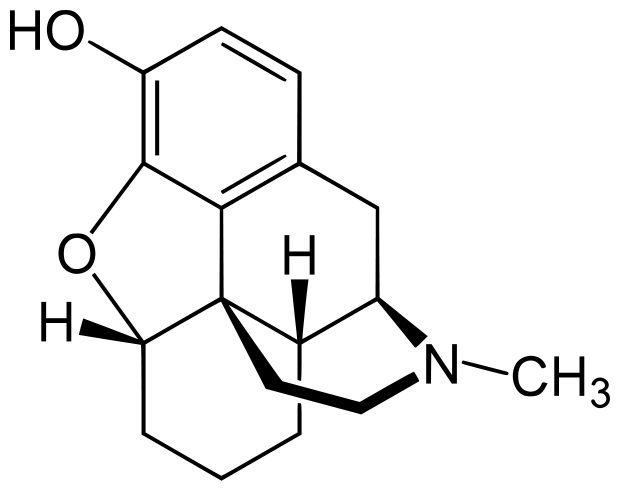
Desomorphine, questionably the main component of Krokodil

     I had my own doubts about the appearance of krokodil within the US. One reason krokodil is a thing in Russia is because codeine is available OTC. Combined with a high rate of opiate use and crushing poverty it's not surprising some people desperate to relieve their pain turn to this toxic, home-baked and short-acting opioid. I doubt there are very many recreational krokodil users, though I may be wrong.
     Codeine is not exactly rare in the US, but given how short-acting desomorphine is (duration around 90 minutes), it just does not seem economical. Most codeine pills are 15, 30 and 60 mg. No synthesis is 100% efficient and there is every reason to believe the amateurish attempts at synthesizing desomorphine from codeine would result in low yields. I personally have not done much in depth research on the specifics of the "krokodil" method, there are some on the opiophile forums that question whether the Russians are truly producing desomorphine. Anyway codeine is sold in Russia OTC and cheap, but that is not the case here in the US.
      So it's possible the recent krokodil-like effects seen in some heroin users may in fact be due to contaminated heroin. We have seen this before, in anthrax outbreaks in UK heroin users (caused by smuggling heroin in the stomachs of animals). You know what might stop people from sticking heroin up the rear end of cows and causing infections in users? Legalization. Drug users have rights, among them the right to the highest possible standard of health. Any regime which violates fundamental human rights is illegitimate and should be discarded. 


A Note about Krokodil Synthesis:

The Russian makers only get a low yield or an impure product BUT codeine phosphate capsules are about $1.50/50x25mg so the start material is cheap. The exact route varies from maker to maker but they all seem to do more or less this:

1-Codeine + SOCl2 ---> α-Chlorocodide + HCl + SO2

2-α-Chlorocodide + I2 ---> 7,8 diiodo α-Chlorocodide

3-7,8 diiodo α-Chlorocodide + HI ----> desomorphine

Basically steps 2 & 3 are done in 1 pot. The iodine adds across the 7,8 double-bond in the same way Br adds across a double bond. The chemist then adds P to make HI which is a reducing agent. It removes the Is. The HI also demethylates the 3-methoxy. Looking at a list of the stuff formed, 6 or 7 impurities are found in varying amounts. Yield of product is about 30% at best. Of course, the stuff is x10 morphine so about 4x heroin (the BNF directs doctors that diamorphine is x2.5 morphine in medical uses).
Now, the product has a bare phenol on it so it cannot be smoked. One can readily esterify this compound (acetyl ester, nicotinic ester and so on) so it's BP becomes sufficiently low.
I will do a full test including pictures if enough people ask me to. It's about £300 of stuff I will use and I have no interest in taking the product... or selling... or giving away.
-Borohydride on the Opiophile Forum

Afterword

    It appears Russia has made codeine prescription-only. Apparently krokodil has become less common, a good thing. For people who used codeine medically, or for junkies trying to take the edge off the withdrawals, life is bound to get more difficult.
     Opiophilia was mentioned in Jacob Sullum's article on krokodil, Another Way Prohibition Makes People's Flesh Rot. I'm a huge fan of Sullum's work, he and Maia Szalavitz are two of the best writers in the mainstream press covering drugs and drug policy.


Tuesday, October 29, 2013

Thursday, October 24, 2013

Harm Reduction, the Ultimate Goal

In the United States harm reduction was followed three basic themes:
-Syringe Exchange
-"Good Samaritan" Laws which offer immunity for people who respond to overdoses by contacting emergency services (immunity may be limited and not cover those on probation, in drug court, nor possession or distribution charges)
-Naloxone (narcan) access for people who use opioids

Radley Balko has a recent post about a Wisconsin state Rep whose daughter is a heroin addict. It was her experience which motivated him to sponsor a series of bills that moved forward harm reduction in Wisconsin:
The Milwaukee Journal Sentinel has the story of Wisconsin Republican state Rep. John Nygren, who is sponsoring a series of bills aimed at addressing and minimizing the damage from heroin overdoses. Two of the policies he's pushing are somewhat controversial. The first would offer limited immunity for people who call 911 or bring overdose patients to an emergency room. The sensible theory behind the policy is that people are reluctant to report overdoses if doing so could subject them to criminal charges. The other would expand those with access to Narcan, a medication that reverses the effects of an overdose.

Nygren is sponsoring these laws after confronting his daughter's heroin habit, and her near fatal overdose in 2009. Unfortunately, that sort of brush with the drug war's collateral damage is sometimes what it takes to make politicians see the light. But good on Nygen for coming around.

The Good Samaritan policy is understandably controversial, although it's certainly a sound approach. You're sacrificing a possible low-level drug prosecution in order to save a life. You'd think that even an ardent drug warrior would find that to be a satisfactory trade.

Or perhaps not. Some drug policies over the years have reflected more of a "better dead than high" approach to addiction. Consider the Narcan policy. If there's a medication out there that can prevent heroin overdose deaths, you'd think policymakers would want it distributed far and wide. But that hasn't been the case. There's a history here in which both the federal government and state governments have tried to restrict Narcan's availability. Consider this quote from Dr. Bertha Madras, deputy director of the White House Office on National Drug Control Policy during the George W. Bush administration.
    "Sometimes having an overdose, being in an emergency room, having that contact with a health care professional is enough to make a person snap into the reality of the situation and snap into having someone give them services."
In other words, withholding lifesaving medication from overdose patients may be just what addicts need to kick the habit for good. Yes, it could also kill them. But at least at that point, they'll no longer be getting high.

Daughter's Heroin Habit Moves Wisconsin Lawmaker To Sponsor Good Samaritan Law


Offering immunity for people who try to save addicts lives and expanding access to naloxone are important measures. Yet these "controversial" measures (if it was saving the lives of any other population it wouldn't be controversial) are doing little more that chipping away some of the worst aspects of the drug war. Rep Nygren's daughter went through the stereotypical junkie experience:

Cassie Nygren's parents divorced when she was 3.

As a teen, she experimented with alcohol and marijuana. She also says she was sexually abused.

At 15, she became pregnant and later gave up her daughter for adoption.

"I had just turned 16 and for her to leave me and be put into a vehicle of somebody else's and driven away was the hardest thing that I've ever had to do," she says. "I know that it was best. I know that it was a selfless thing to do. I know that she's loved and safe, and I wouldn't ask for anything more. However, it affected me, and it was never dealt with."

Months after she gave birth, she says, she started using Oxycontin, a commonly abused prescription narcotic painkiller. A friend introduced her to the drug, she says.

"I loved it right away," she says. "It gave me a feeling of being numb, no pain. It filled a void of emptiness that I had had, and right away I was hooked. The way I started was snorting....By 18, I was shooting heroin."

To feed her drug habit, she stole from her family.

"I don't think even any dollar amount could answer how much I've stolen and robbed from them," she says. "Not just in expenses or valuable things but our trust."

She cries as she recalls stealing her dad's Jaycees ring and pawning it for $150.

"It breaks my heart and to have admitted that to him was extremely hard," she says.

Cassie Nygren confessed to her father about her drug problems during a dinner at a local pizza restaurant.

[...]
"She looked terrible," he says. "Face white, pale, sunken in. And she's a pretty girl. You could basically see it on her face."

The family got her into treatment, but it didn't stick. She was in and out of several programs.

"A smart kid with a bright future ended up not graduating from high school," John Nygren says. "She got her GED later."

And she spent time in jail. The prosecutor, Marinette County Assistant District Attorney Kent Hoffmann, says his approach in Cassie Nygren's case "was to send her to prison to save her life."

After serving her prison sentence, Cassie Nygren violated her extended supervision several times. The latest was over the summer when she left town with an ex-boyfriend. They went to Texas, where she was picked up during a routine traffic stop.

She says she was trying to break away so that she could live a clean life with a friend in Texas. She says she now knows it was a mistake to leave.

John Nygren and his ex-wife worry about what will happen to their daughter. Amy Harris says she has seen encouraging changes in recent weeks.
 Marinette lawmaker confronts daughter's heroin addiction, seeks new legislation

Cassie Nygren

A traumatized girl deals with her mental pain by self-medicating with opiates. Because real drug education on how to use drugs safely is nonexistent, and only the most concentrated and therefore dangerous formulations are available to users (oxycontin and heroin instead of opium or poppy pod tea), the chance of overdosing is high. Cassie Nygren's story, the overdosing, stealing, jail, the in-and-out of ineffective treatment programs, is far from unique. It could even be called the stereotypical junkie story, but it doesn't need to be.

If Cassie Nygren was offered heroin maintenance she could have been kept from overdosing, stealing from her family and out of jail. She might even go to school and become a productive member of society. Expanding opiate maintenance beyond methadone and buprenorphine to include the full spectrum of available opioids would probably do more to lessen the problems of opiate prohibition than any other measure (short of full legalization). The black market would be dramatically reduced and users would no longer be criminalized. Because heroin is relatively harmless in and of itself, most of the health problems that are common in heroin users would disappear. The acquisitive crime and prostitution that is so common among destitute addicts would be dramatically reduced. The hard working addicts who hold down a job only to see a sizable portion of their paycheck go to supporting their habit would keep that money, improving the quality of life of their families. Accidental overdoses would be rare, and would be promptly treated by clinic staff.

The cost of pharmaceutical heroin, morphine and the other semi-synthetic opiates is negligible. The savings in criminal justice costs, crime averted and health savings more than compensates for the cost of running opiate maintenance clinics. The only real cost to society is that we would have to stop persecuting addicts and give them the drugs they want.

Opiate maintenance using the individual's opioid of choice is the form of harm reduction that has the most benefit for the individual and society. I urge all drug reformers to move the discussion beyond (but not abandon!) clean syringes, safe injection facilities and "Good Samaritan" laws and adopt maintenance prescribing as the most important harm reduction goal.


Saturday, October 19, 2013

Opium Dens and Shooting Galleries

In the 19th century when opiates were legal, consumed as opium, morphine or patent medicines containing opium among other ingredients, there were two primary types of addicts. One was predominantly white, and had been introduced to opiates from a doctor (iatrogenic addiction). They took their opiates orally, or increasing through a syringe. Women outnumbered men, middle-class housewives were typical cases.
The second type of addict was the opium smoker. Opium smoking was a Chinese custom, one they brought with them upon mass immigration to the US in the latter part of the 19th century. 


The Chinese immigrant largely isolated themselves, in part due to racism and in part by choice. Most immigrants were young men hoping to earn enough money to return home a wealthy man, a dream few actually realized. Regardless most thought of themselves as temporary workers and saw no reason to assimilate with US society. Mass influx of Chinese labor willing to work cheap was seen by some as taking away jobs from white native Americans, when combined with racism and xenophobia, contributed to the exclusion of the Chinese.

One major exception was the opium den, which attracted the more deviant members of society. The opium den was more than just a place to get high. "More formally, the opium den had become the matrix of a deviant subculture, a tightly knit group of outsiders whose primary relations were restricted to themselves." (Courtwright, 1982) The den was one of the few places where Chinese and whites, of both sexes, mixed openly. Lurid charges were leveled at proprietors, charges that Chinese perverts were using opium to seduce young white women into a life of immorality. The labor leader Samuel Gompers excelled at using hysterical rhetoric, complete with anxieties over miscegenation, to drum up popular support against the opium den:

"...tiny lost souls...forced to yield up their virgin bodies to their maniacal yellow captors...What other crimes are committed in these dark fetid places when these innocent victims of the Chinaman's wiles were under the influence of the drug opium is too horrible to imagine. There are hundreds, aye thousands, of our American girls and boys who have acquired this deathly habit and are doomed, hopelessly doomed, beyond redemption.

They carry the curse of China, opium, as their weapon. They and their poison must be rooted out before they will decimate our youth and emasculate the coming generation of Americans."
 
Opium Dens from around the world, some are more affluent than others but the basic accommodations for those on the hip are the same.
The reality was quite different, as the historian David Courtwright documents:


"An opium den was more than a school, however; it was also a meeting place, a sanctuary, and a vagabonds' inn. Member's of the underworld could gather in relative safety, to enjoy a smoke with their friends and associates. One addict has left us a memorable portrait of life in the New York City dens. 'The people who frequent these places,' he recounted, 'are, with very few exceptions, thieves, sharpers and sporting men, and a few bad actors; the women, without exception, are immoral.' In spite of the desperate character of clientele, fights were practically unknown. Instead, the smokers passed the time between pipes by chatting, smoking tobacco, telling stories, cracking jokes, or even singing in low voices...Within the den a rigid code of honor prevailed: smokers would not take advantage of other smokers, or tolerate those who did. 'I have seen men and women come to the joints while under the influence of liquor,' continued the New York addict, 'lie down and go to sleep with jewelry exposed and money in their pockets, but no one would ever think of disturbing anything.' 'The joint,' confirmed an experienced Denver smoker, 'is considered a sacred sanctum, and to betray...any conversation between the fiends is considered an unpardonable offense, and a fiend who commits a second offense of this character is generally debarred from all the rights and privileges of the joint.'" (Courtwright, 1982)

In many ways the opium den represented the start of the drug subculture in the United States. Language still in use today originates from the opium den culture. "Hip", which is used by drug users to distinguish themselves from non-drug users ("squares", "straights"), originates from opium smokers lying on their hip while on the pipe. The word "dope" is adapted from the Dutch, originally meant a thick, viscous sauce, probably adapted during the process of preparing the opium for smoking. Today "dope" is a generic term for any illicit drug (though where I come from if you ask for dope on the street you are referring to heroin).


If the opium dens were left alone, perhaps by today they would be legitimate. People would be able to choose whether to frequent an alcohol bar, cannabis cafe or opium den. Because opium is smoked slowly, overdosing is more difficult than taking concentrated derivatives. Proprietors would be on hand to treat any cases of overdose.
"Needle Park" in Zurich, Switzerland (prior to heroin maintenance)

Unfortunately the War on (the people who use certain) Drugs has perverted this possible scenario. Opium smoking is almost unknown in the US, almost all the opium produced for the illicit market is manufactured into heroin. Because of prohibition, the cost of this inexpensive to produce, plant-based medicine is astronomical. This encourages methods of ingestion that maximize the effect: intravenous injection.

So instead of opium dens, we have shooting galleries. A shooting gallery is a place where addicts can inject together in relative safety, they are also synonymous with disease and degradation. In contrast to the opium den described by Courtwright, if someone nodded out in a shooting gallery their money and jewelery would almost certainly be stolen.

By ending the drug war and bringing back the opium den, the problems of accidental overdoses will be reduced. Diseases associated with injecting drugs of unknown purity and subject to no quality control (meaning they may be adulterated with other drugs or diluted with substances never meant to be injected), in addition to blood born infections from sharing syringes, will be reduced or eliminated altogether. Crime brought about by the poverty resulting from being dependent on an (artificially) expensive drug will disappear. Drug dealers and criminal cartels will be replaced by taxpaying opium den proprietors.

Further Reading and References:


Courtwright, David T. (1982) Dark Paradise Opiate Addiction in America before 1940. Cambridge, MA: Harvard University Press